Pine Nut Noodles (Jat-guksu)
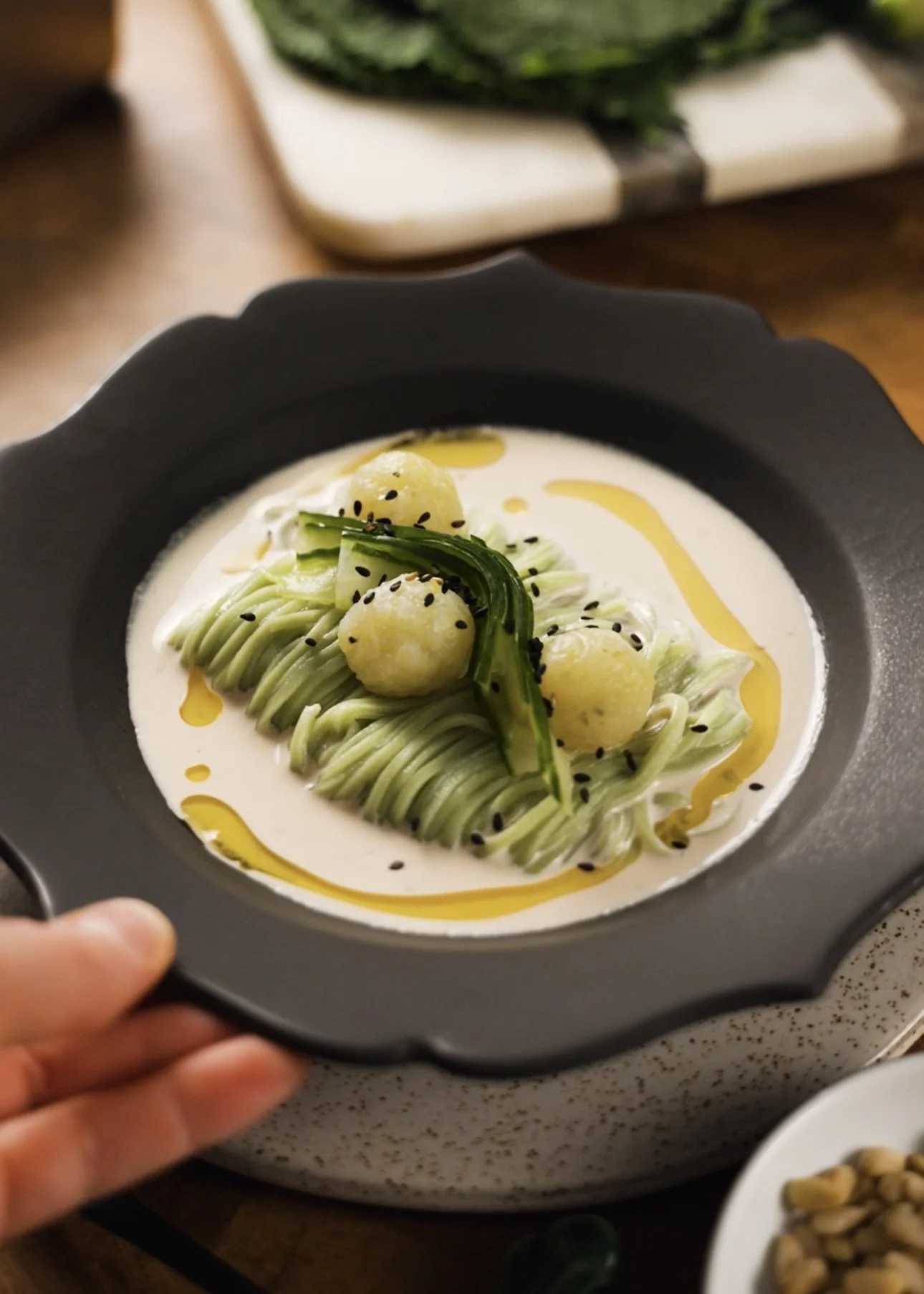
I have another recipe for you inspired by Culinary Class Wars.
I’ve been working on quite a few recipe recreations this month. Testing them out to make them easy for you to make, has been so fun.
These Pine Nut Noodles or Jat-guksu inspired by the ones Venerable Sunjae made—turned out soooo delicious. Technique wise, it is up there in difficulty, but ingredient wise, it is fairly reserved.
The cold pine nut broth is creamy and slurp-able, and the noodles are sweet, with a slightly peppery taste from the added veggie juice blend.
The ongsimi (chewy potato balls) tested my patience HAHA! It took a few attempts to get a taste and texture I liked. The version I settled with was a par-cooked shredded potato mixture, mixed with additional potato starch, which gave it a nice ~soft chew~ once boiled!
Simply delicious.
Let’s make it!
Recipe:
Makes 4-5 servings
Special Equipment:
Blender
Sieve
Pasta Maker (optional)
Pine Nut Broth:
150g pine nuts
300 ml water
4g coarse salt
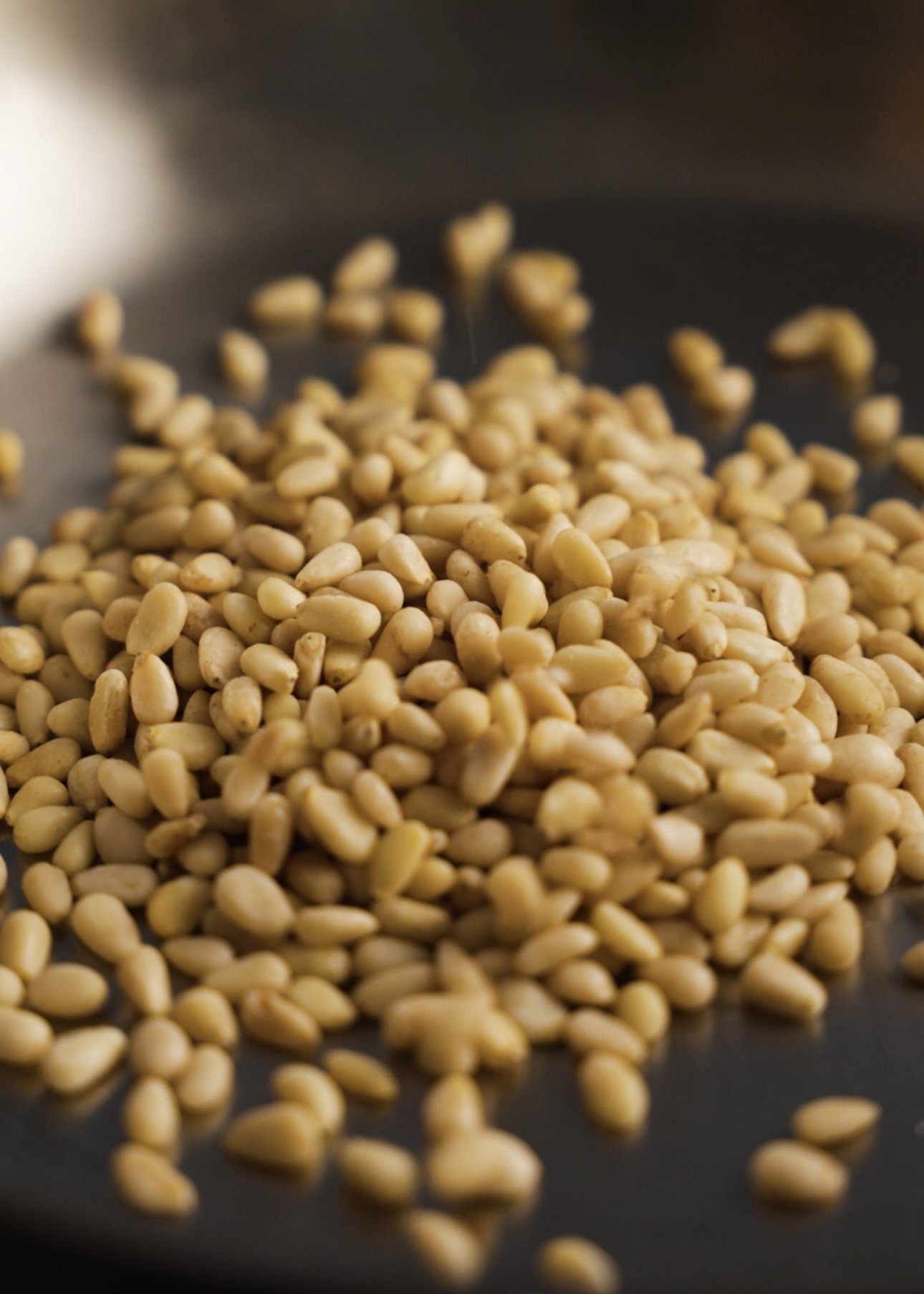
In a saucepan, add your pine nuts. Place over low heat, and proceed to toast them. Shake the pan and/or use a spoon to stir them to prevent uneven browning.
Once the nuts appear golden and fragrant, remove them from the heat.
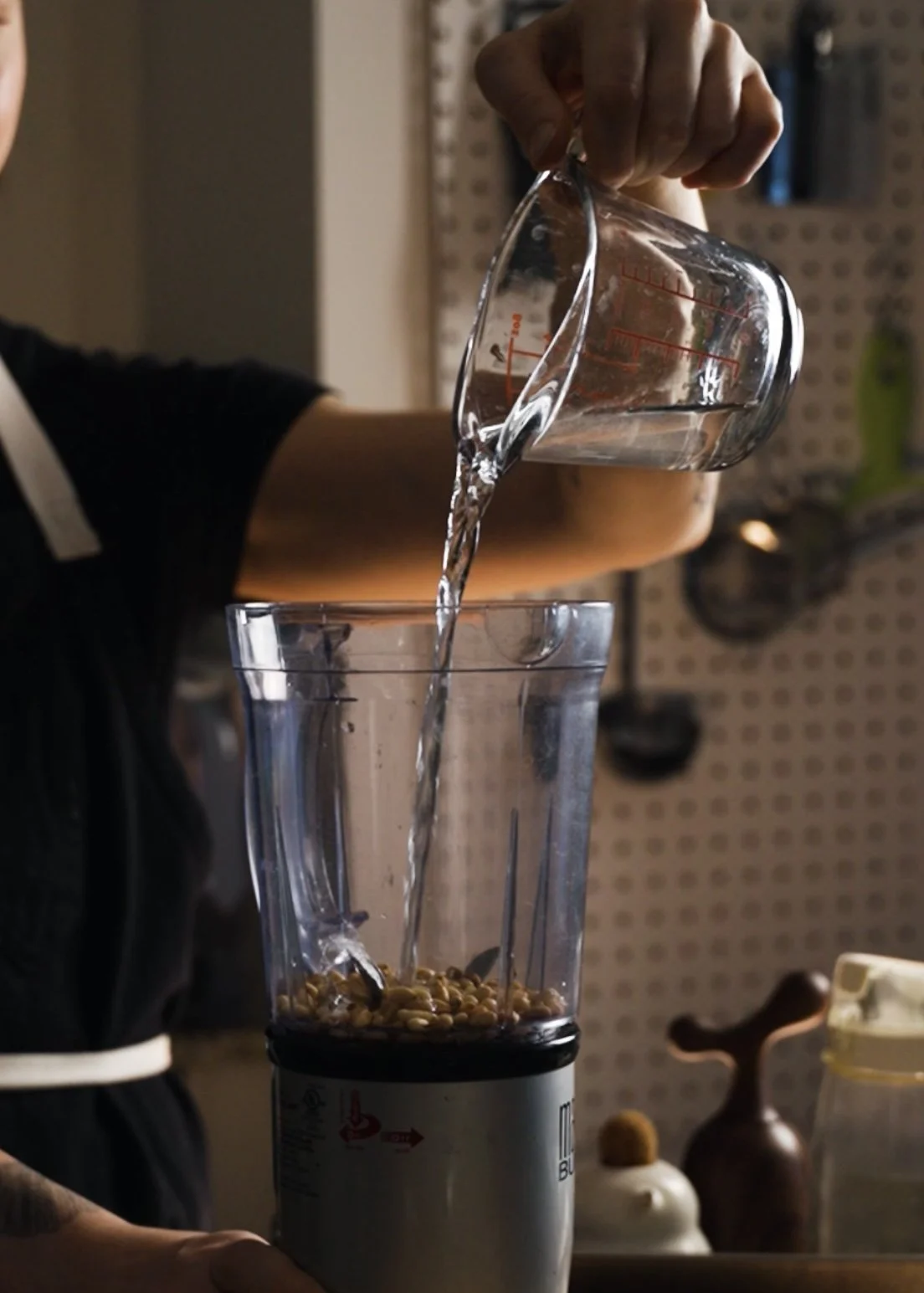
Add the pine nuts, water and salt to a blender. Blitz until smooth. Taste to see if it is seasoned to your liking. If the mixture is too thick, add a splash more water.
Transfer the pine nut broth to a measuring cup or bowl. Refrigerate until needed.
Ongsimi (Chewy Potato Dumplings)
160g russet potato
3g salt
1g finely minced perilla leaf
15g potato starch
Wash and peel the potato. Discard the skins.
Place a strainer or sieve over a medium sized, microwavable bowl.
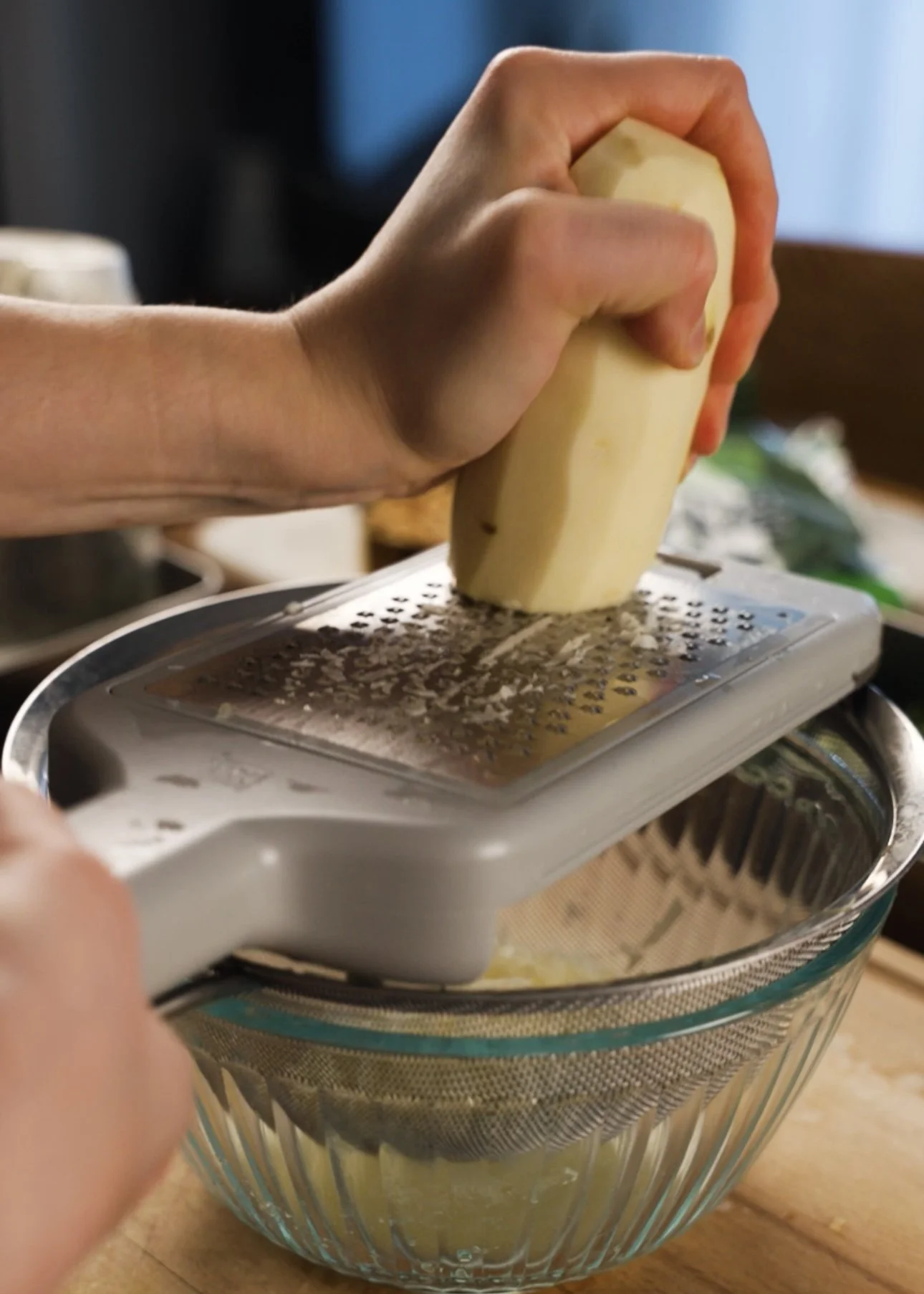
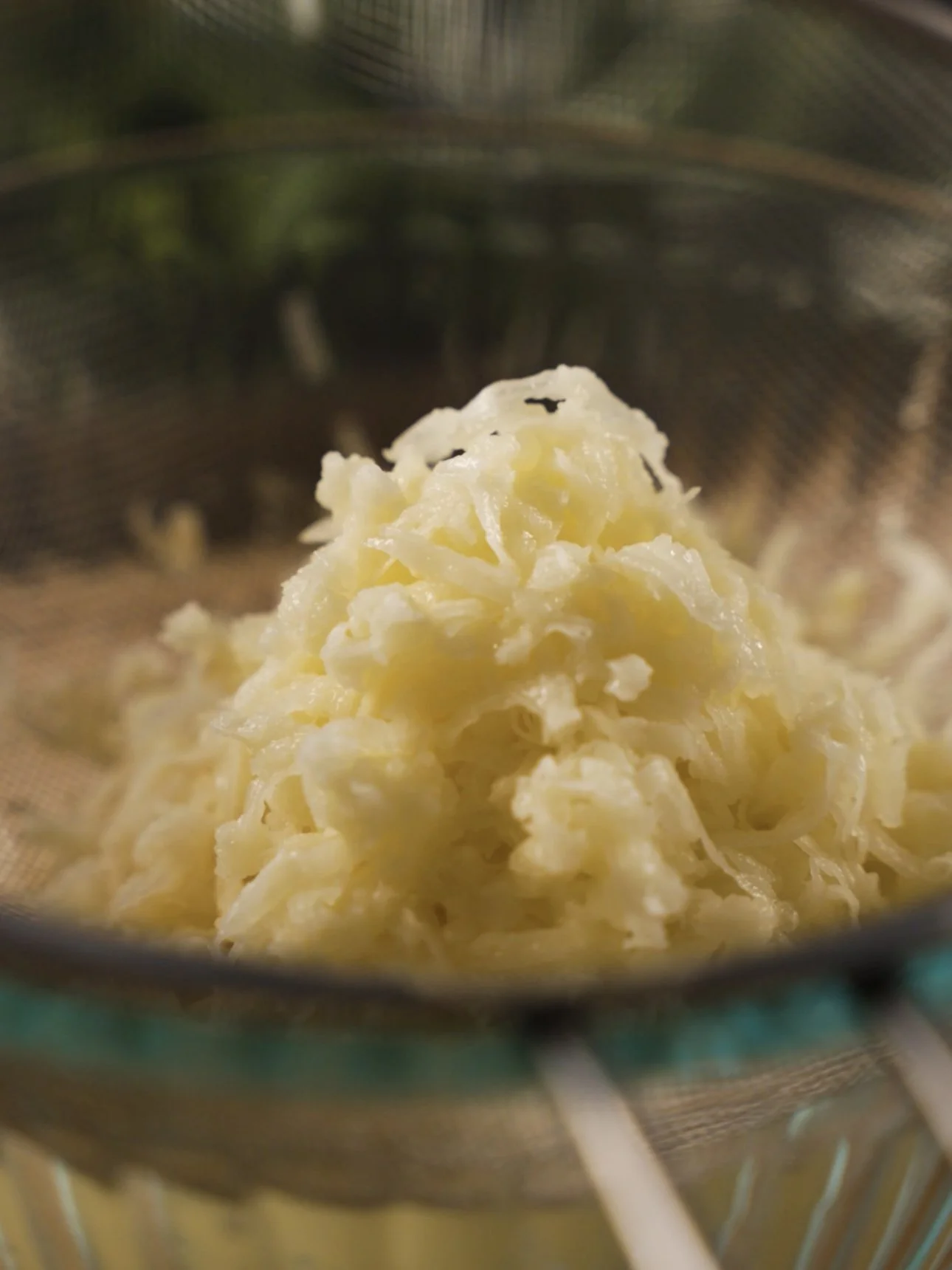
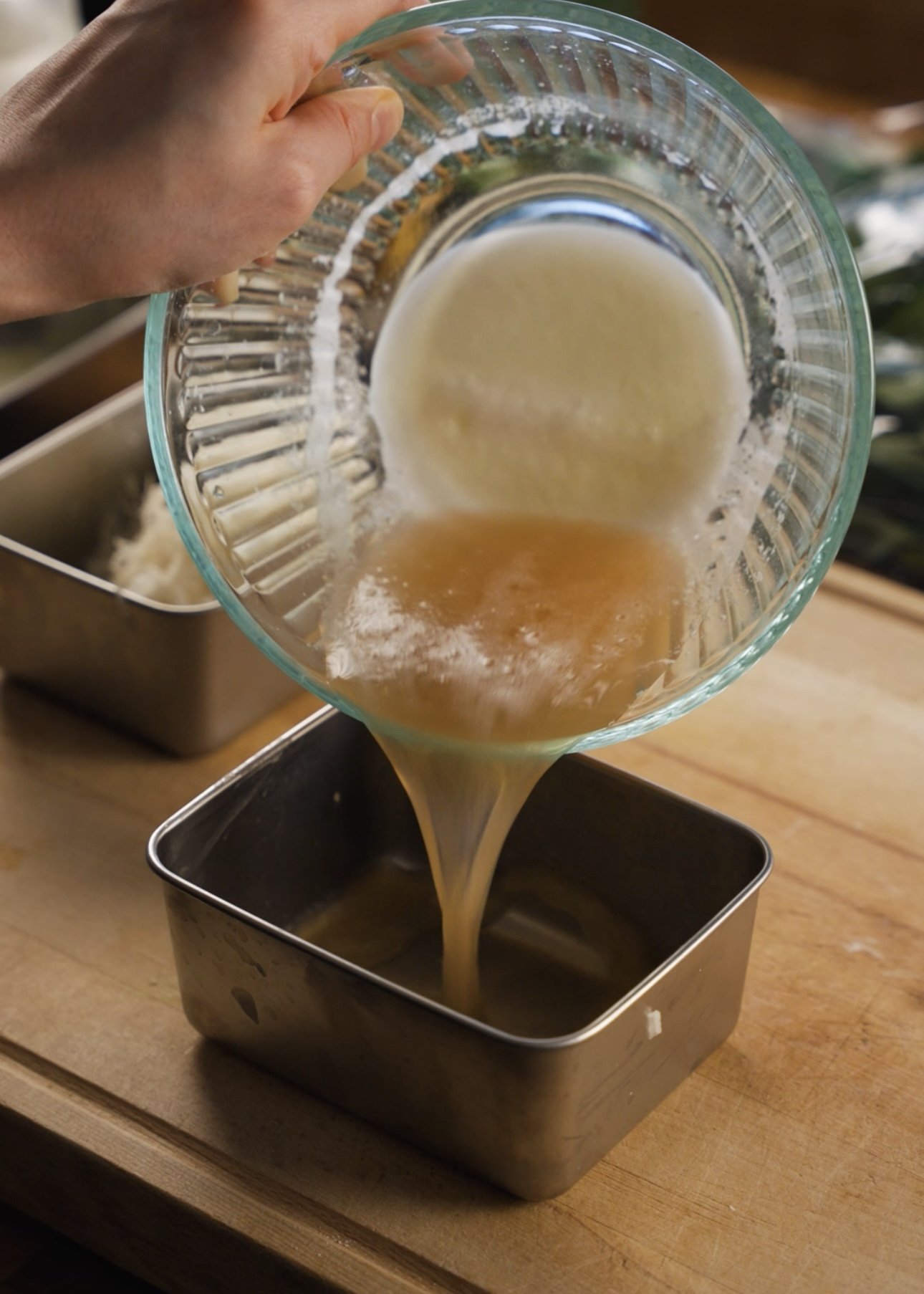
Use a cheese grater to grate the potato into the strainer, allow the potato to drain, help by squeezing the juices out. Do not discard the liquid! Let the liquid sit for 15 minutes. The starches will settle to the bottom of the bowl. Once the starches and the potato juice have separated, pour out the liquid and discard, keeping the solidified starch at the bottom of the bowl.
To avoid discolouring from oxidization, rinse the grated potato under cold water. Squeeze it as much as you can to get rid of excess liquid.
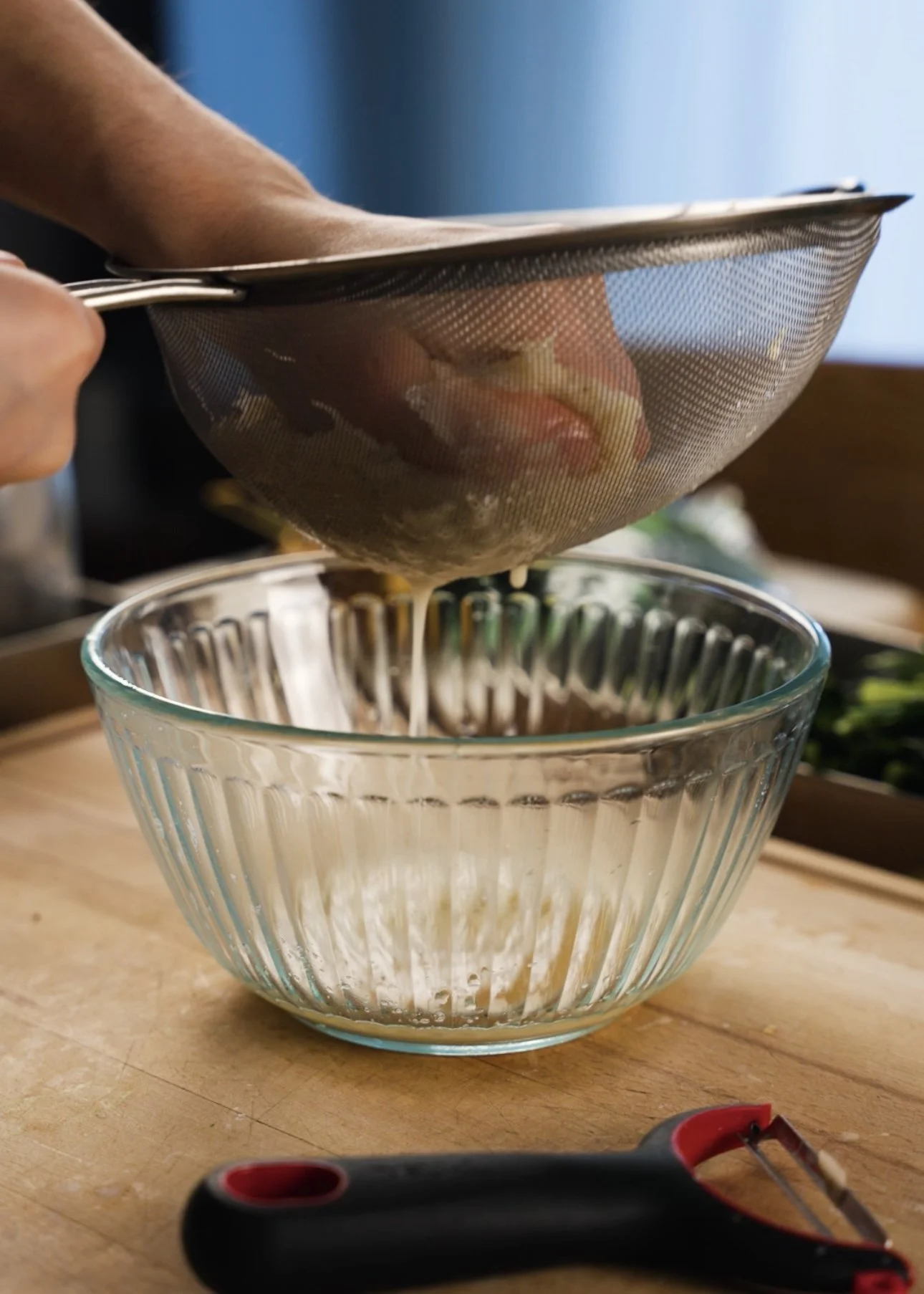
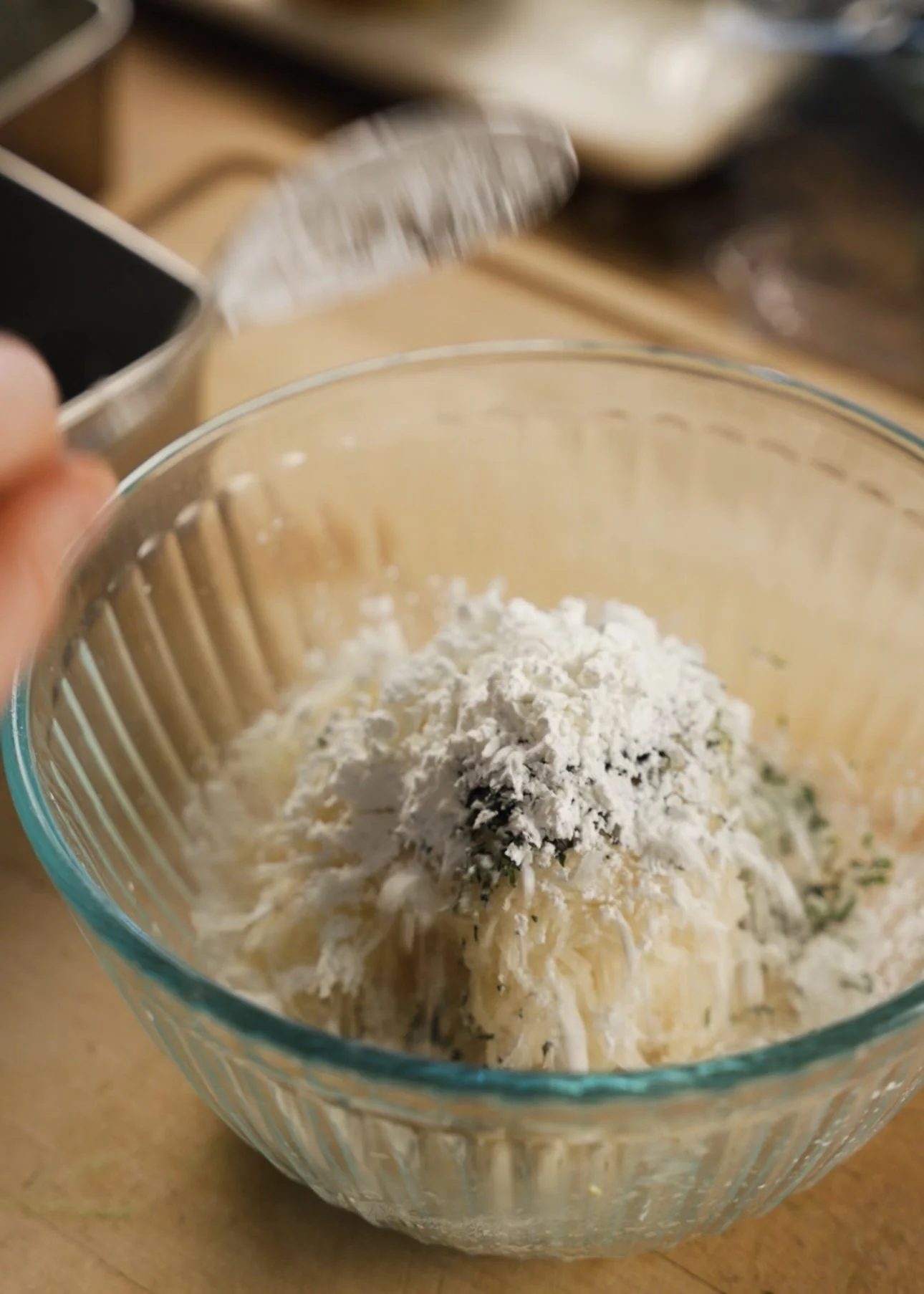
Place the grated potato back into the bowl with the solidified potato starch, the salt, minced perilla leaf and additional potato starch. Mix to combine.
Cover with plastic wrap and place the mixture in the microwave for 30 seconds. Stir and zap in the microwave for another 20 seconds to par cook the potato.
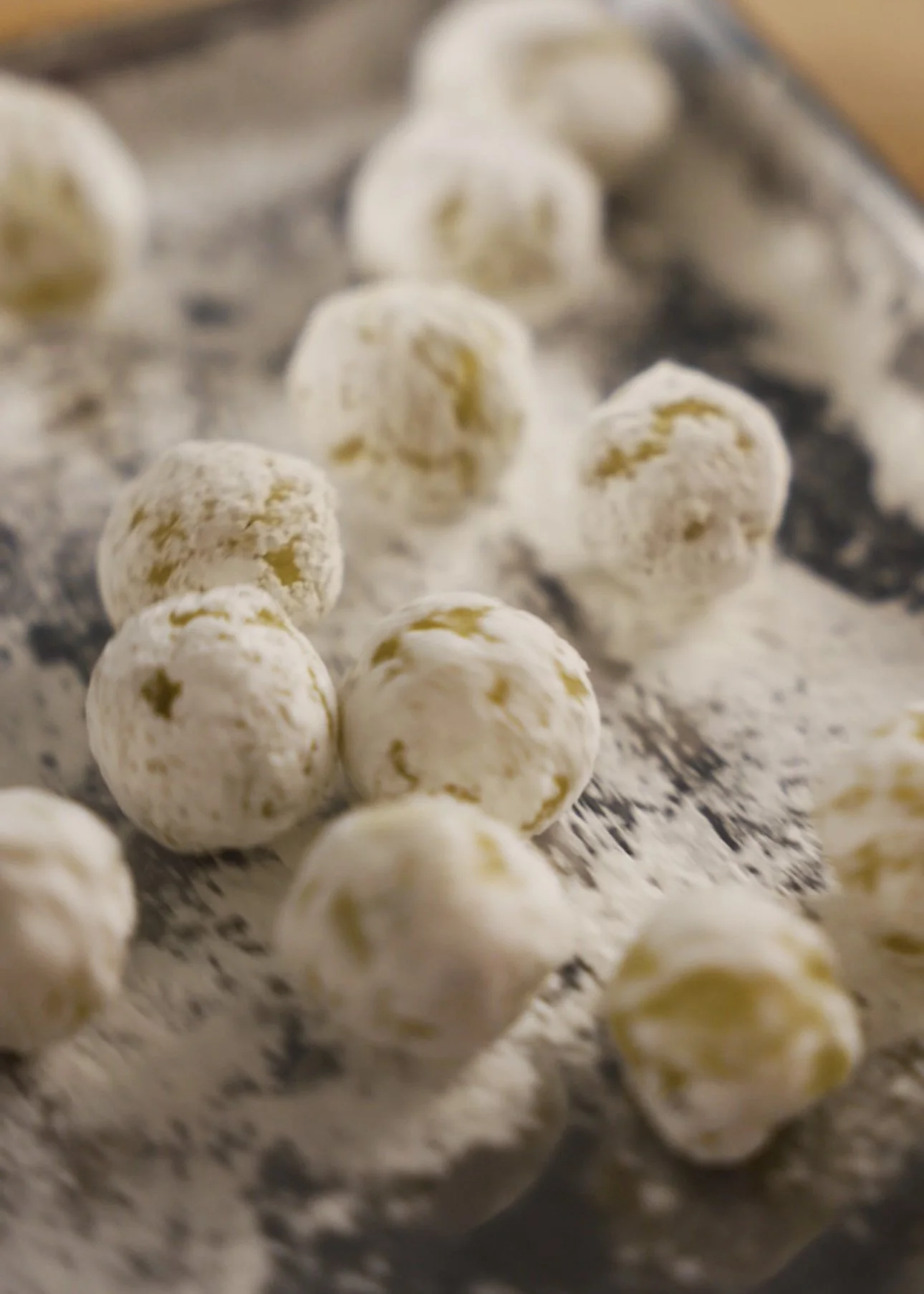
Allow it to cool slightly before portioning and rolling into small balls.
Coat with potato starch and place on a baking tray. Refrigerate until ready to use.
Noodles:
200g water
50g zucchini
50g cucumber
25g spinach
4 perilla leaves
coarse salt
300g flour
8ml lye water
Fill a medium pot with water, and add a generous teaspoon of coarse salt. Place it over high heat and bring to a boil.
Prep the zucchini and cucumber by chopping into discs. Wash your spinach and perilla leaves.
Prepare an ice bath for your blanched veggies (fill a bowl with ice and cold water).
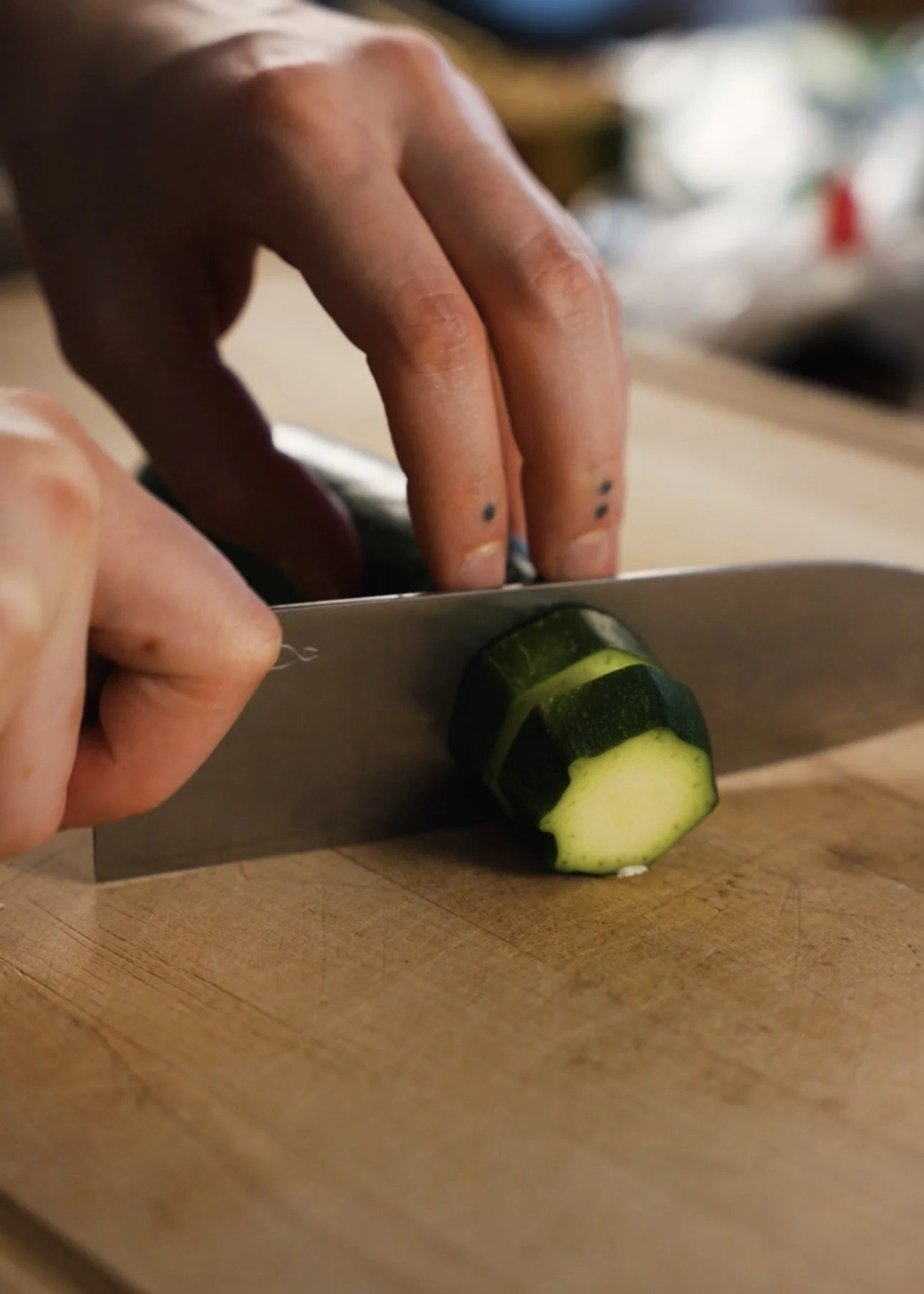
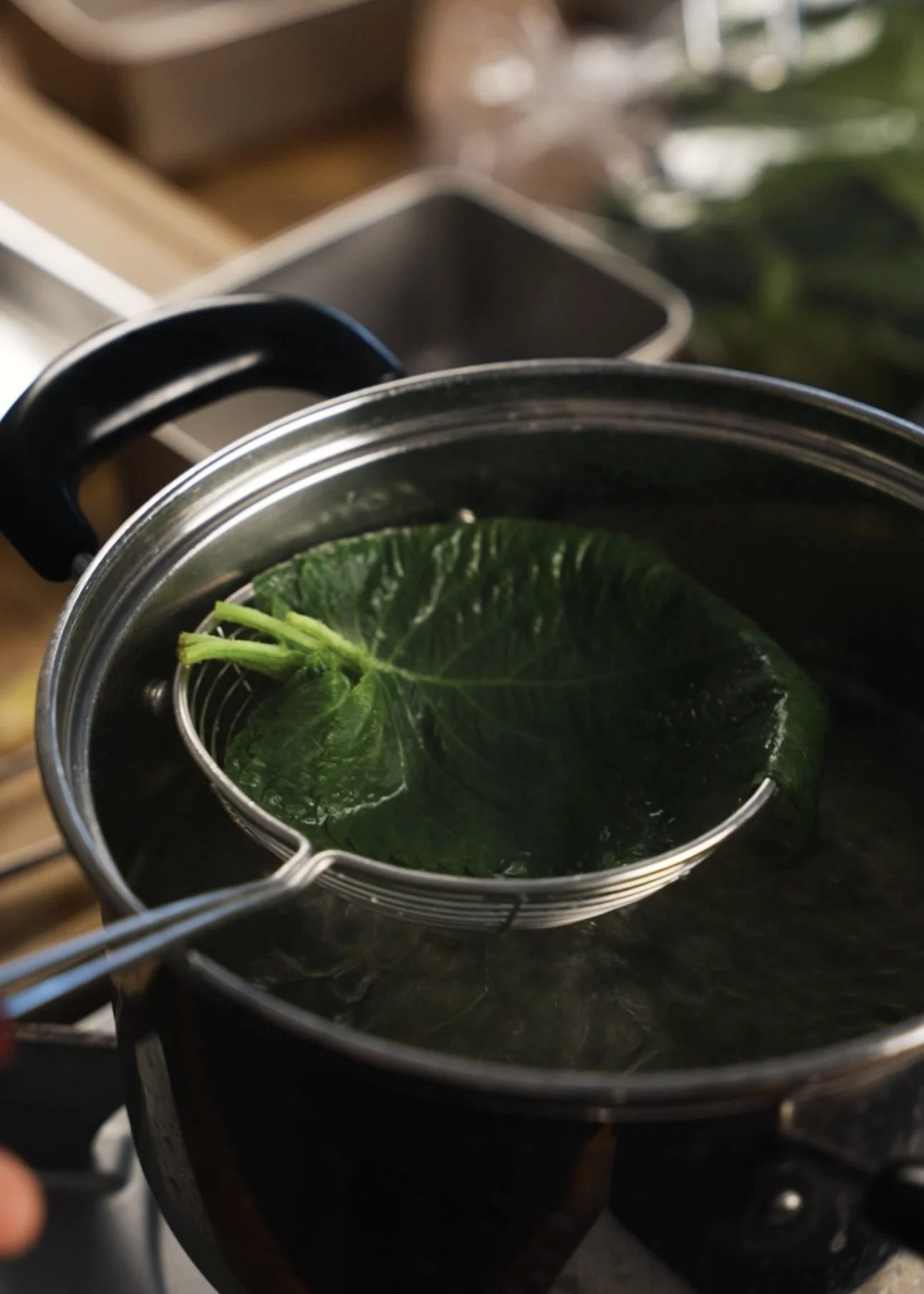
Once the pot of water starts to boil, blanch your veggies: zucchini and cucumber for 40 seconds, spinach and perilla leaves for 30 seconds. Promptly remove from the pot with a sieve or spider, and dunk in your ice bath to stop the cooking (alternatively, run them under super cold water!).
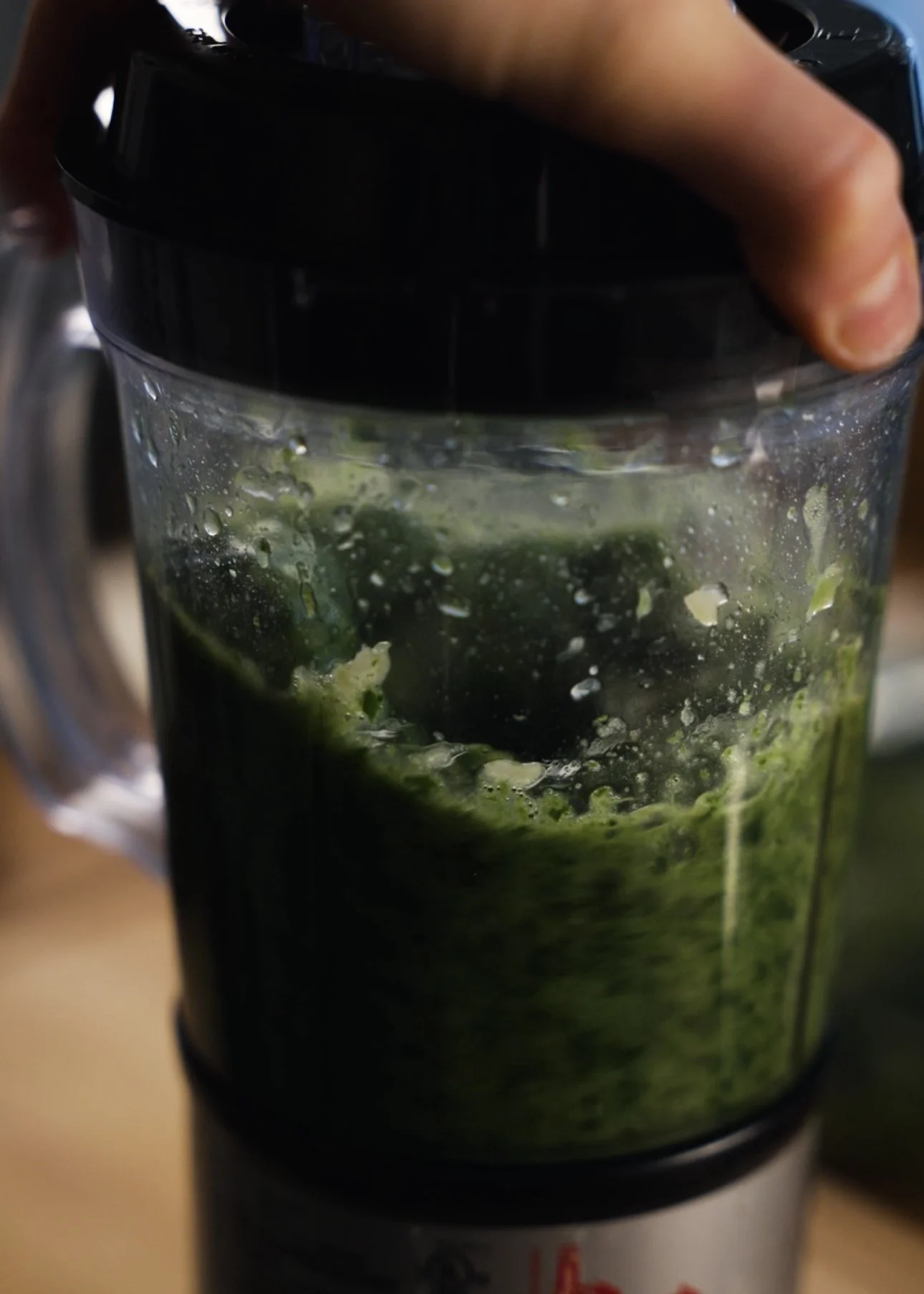
Place your blanched veggies, 200 ml of water and a pinch of coarse salt in a blender. Blitz until smooth.
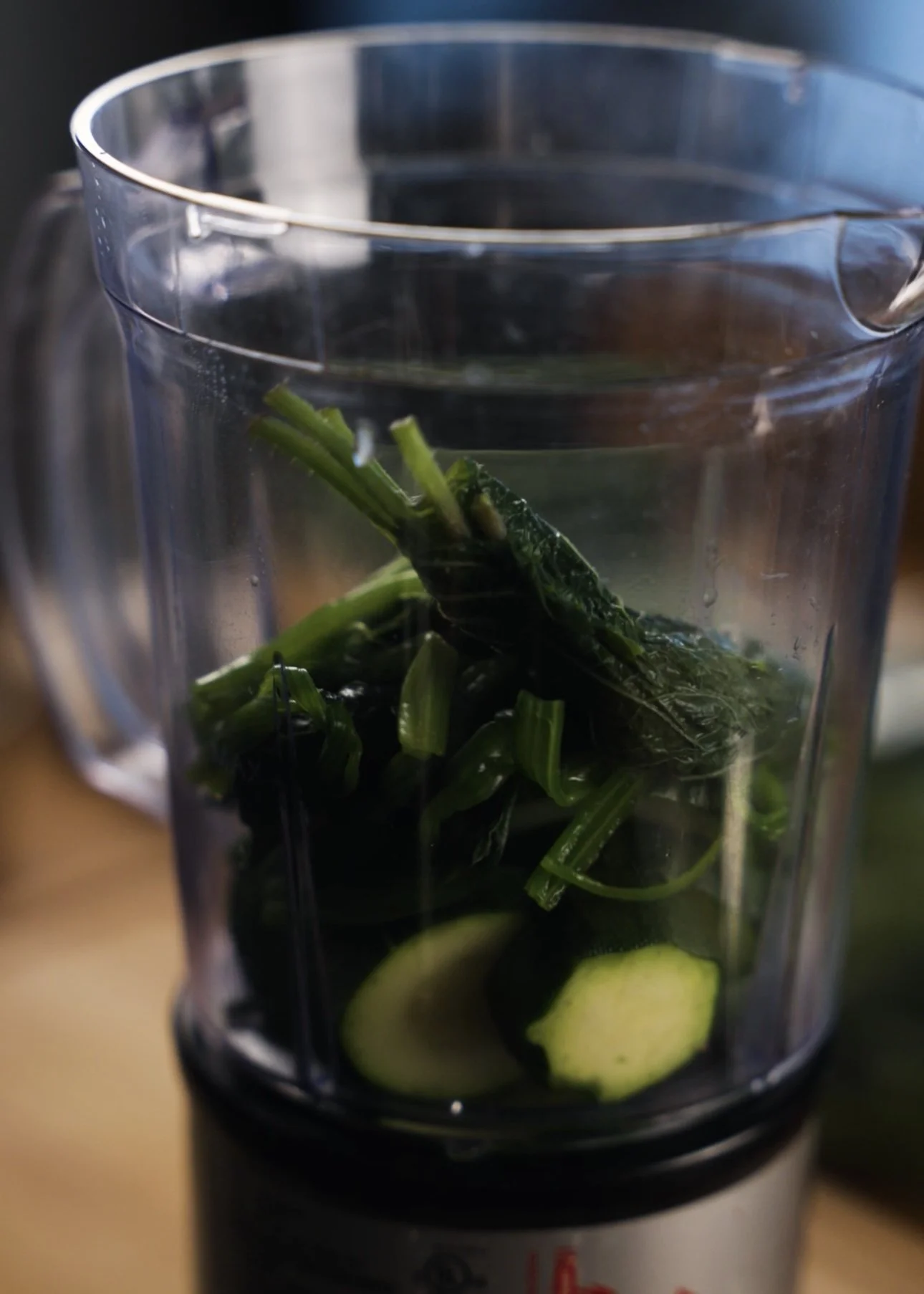
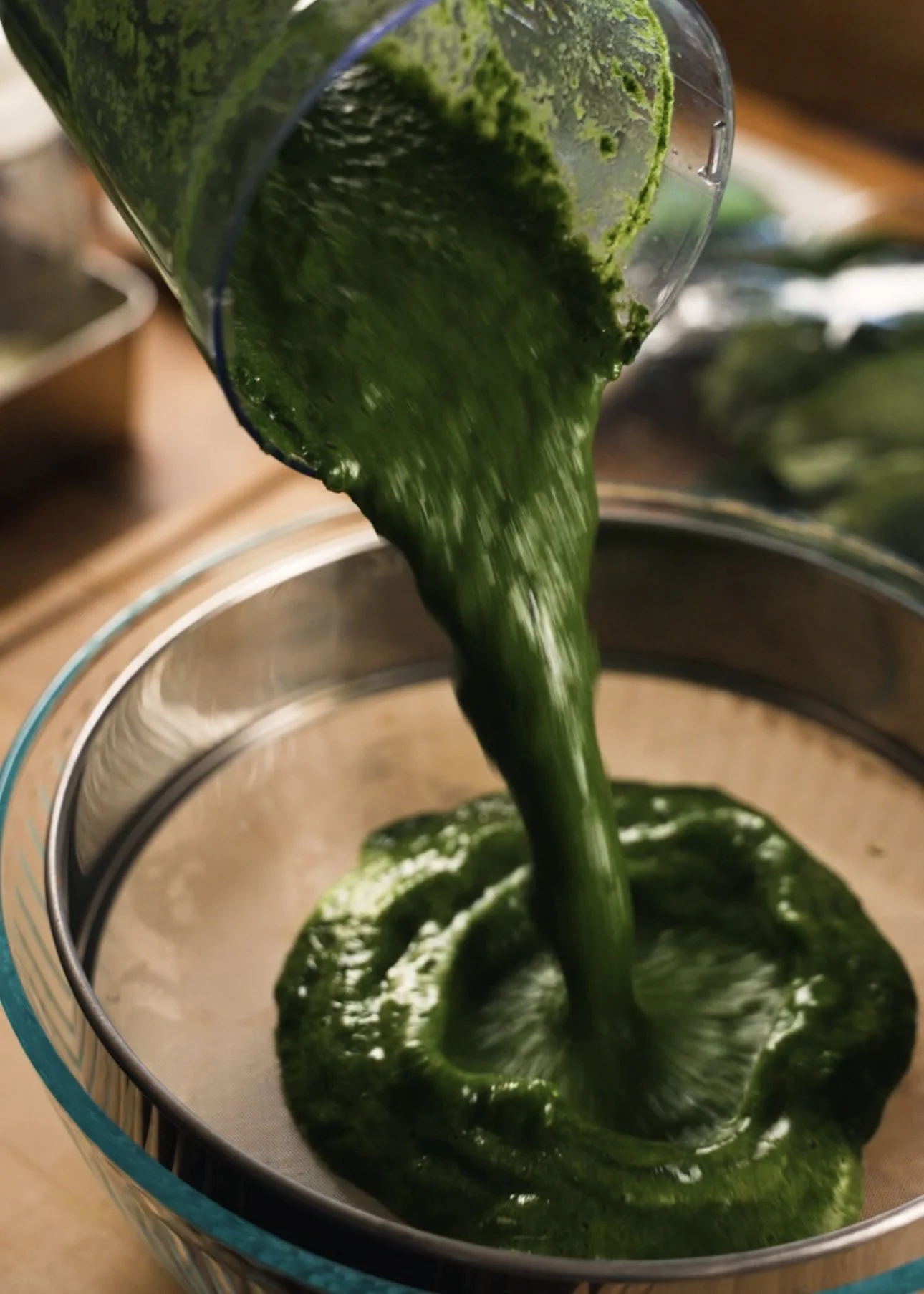
Pour the veggie juice through a strainer and into a large measuring cup. Use a spatula to press the solids, extracting as much juice as possible. Discard what remains in the sieve or use it in another dish (like with cooked rice!)
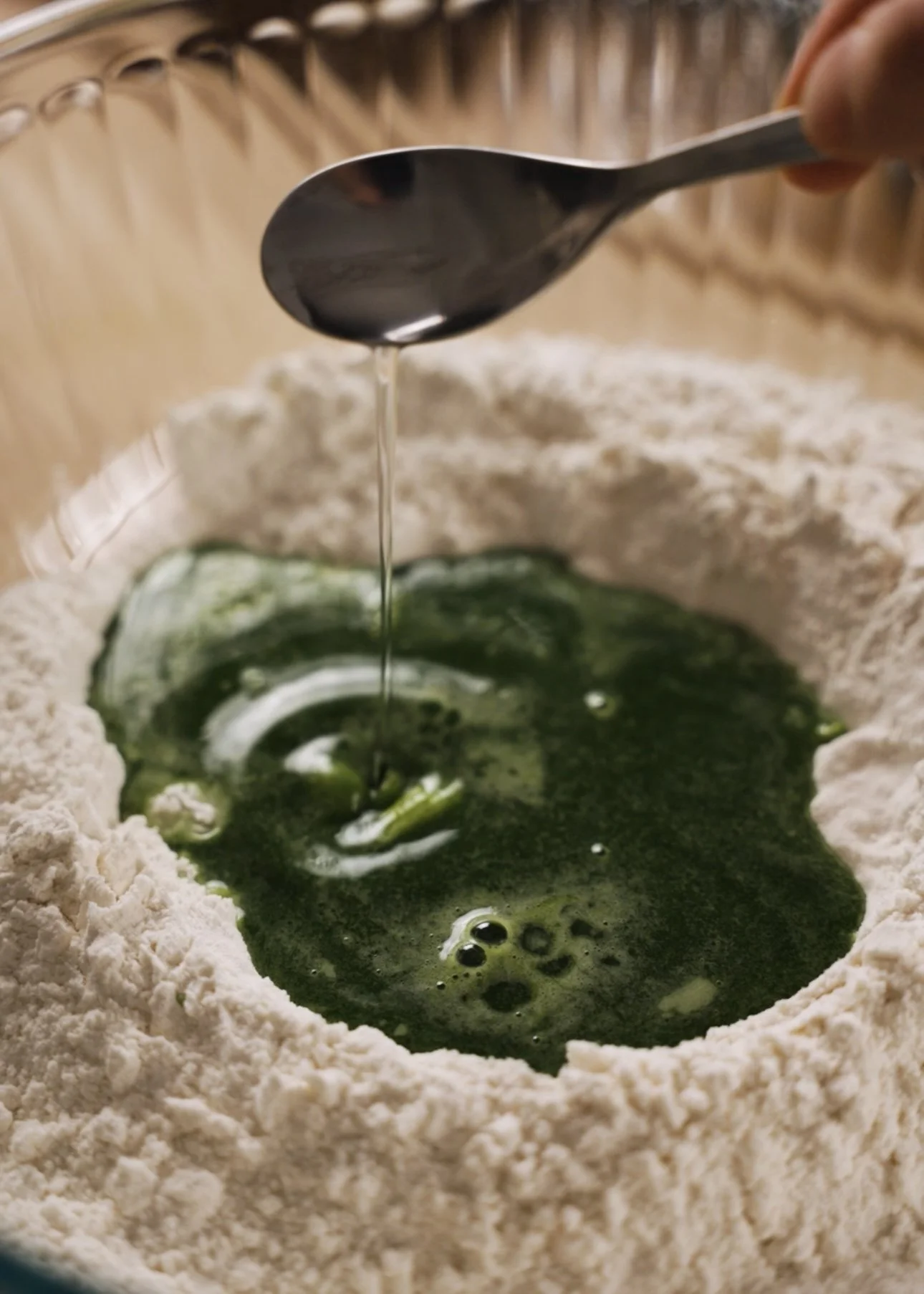
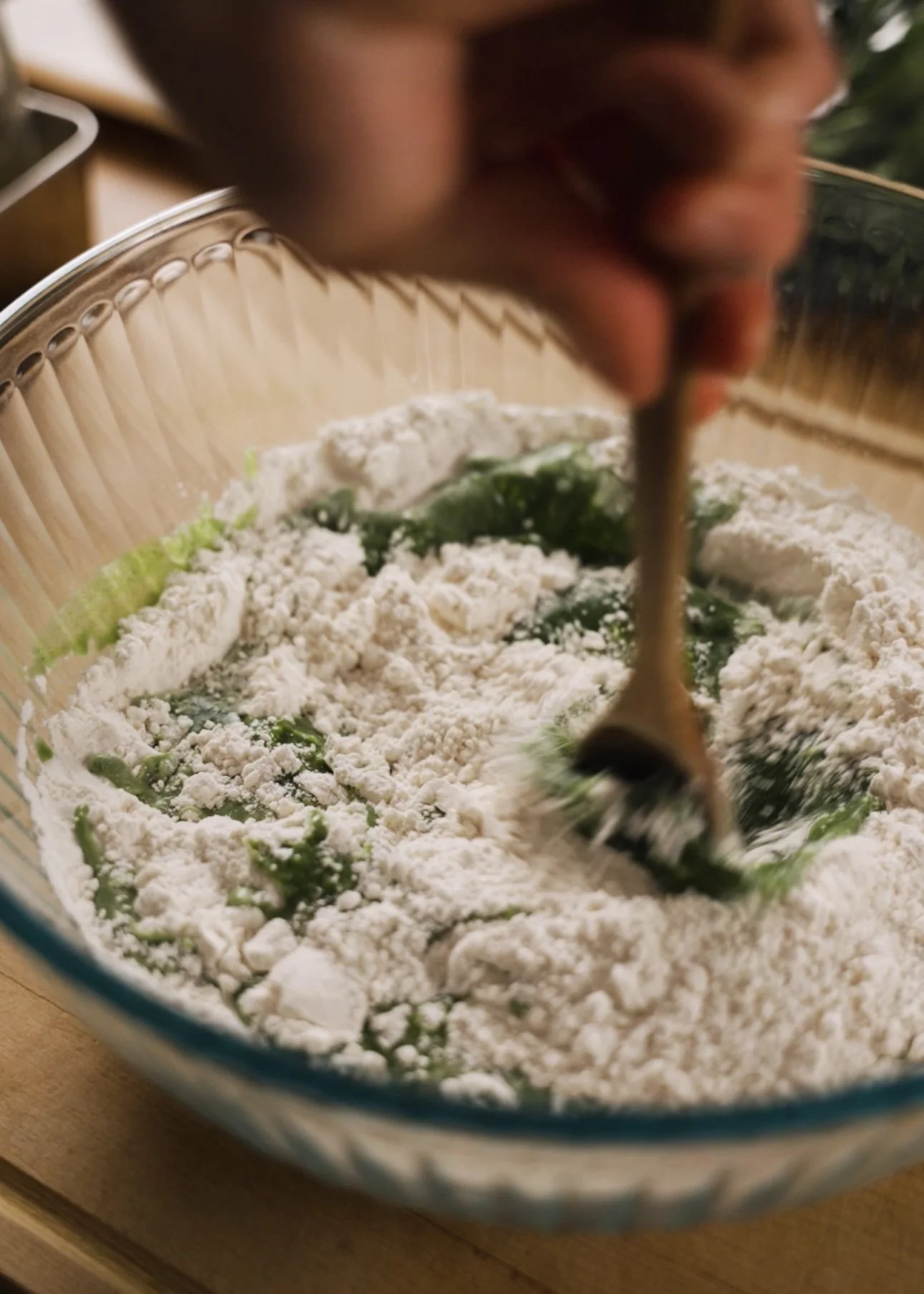
In a large bowl, add 300g of flour. Create a well in the centre, and add 150ml of your veggie juice, along with 8ml of lye water. Use a wooden spoon to slowly incorporate the flour with the liquid. Once it starts to come together, use your hands until it forms a shaggy dough. Add a spoonful more of veggie juice at a time if you notice the dough is too dry.
Place the rough ball of dough on the counter. Cover with a bowl, let it rest for 15 minutes to allow the flour to hydrate.
Once rested, transfer the dough to a large freezer bag, release as much air from it as possible, but there should be enough wiggle room inside.
Place the freezer bag on the ground: and use your feet to knead the dough. When it becomes too flat, open the bag and use your hands to fold the dough over, onto itself.
Repeat this a few times or until the texture of the dough looks relatively smooth.
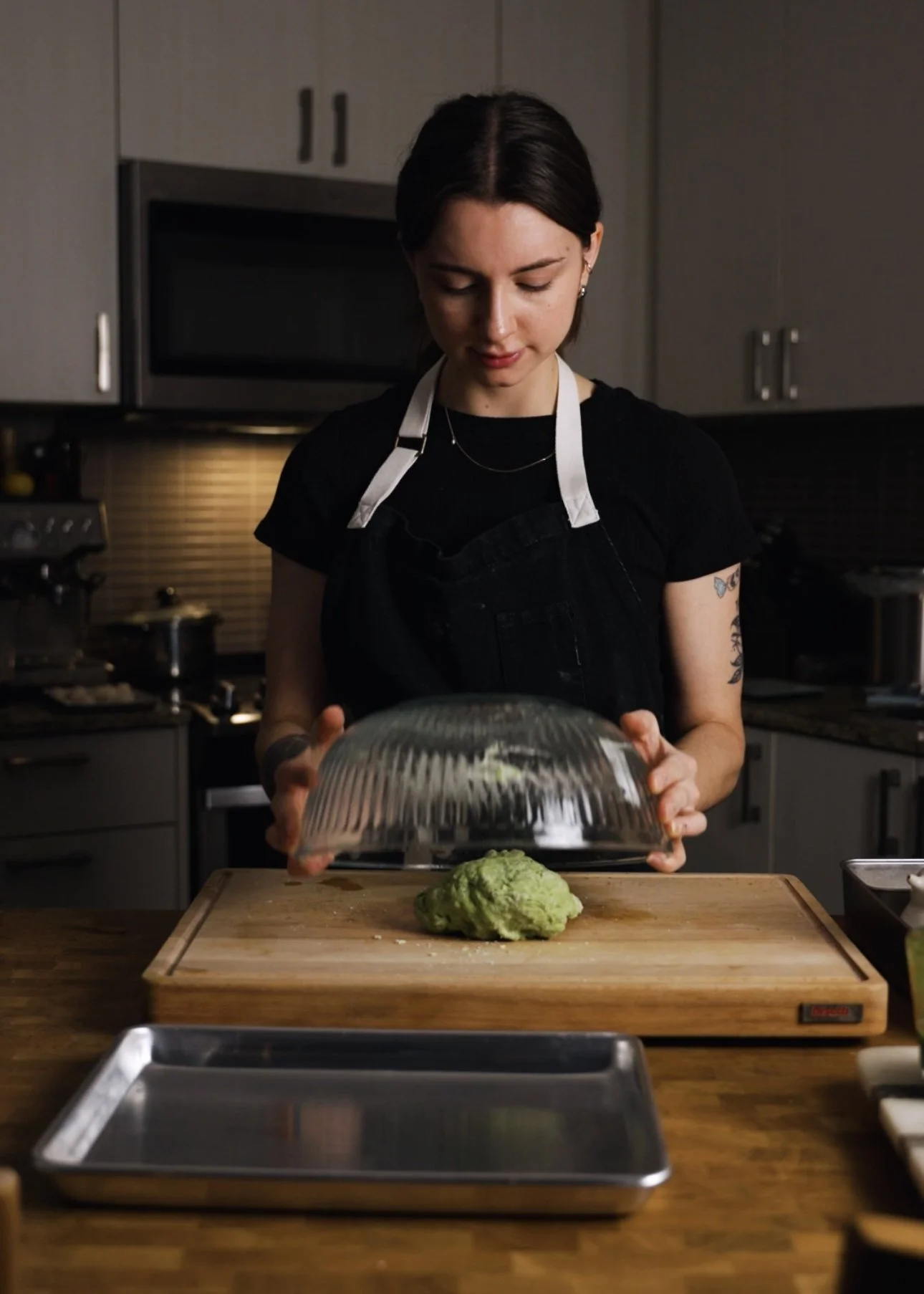
Let the dough relax for 45 minutes, (or place it sealed in the fridge overnight) before moving on.
Once the dough has rested, you can start to roll it out. Divide the dough into 2 portions, and shape them into rough rectangles. Use a pasta maker/ sheeter / rolling pin to start to flatten the dough into long strips.
To build strength in the noodles: we will fold the dough. When the pieces of dough are at a medium thickness and length, create an “envelope” fold. Fold 1/3 over, and the other 1/3 on top.
Rotate the dough 90 degrees, and place it back into the sheeter to flatten it out once again.
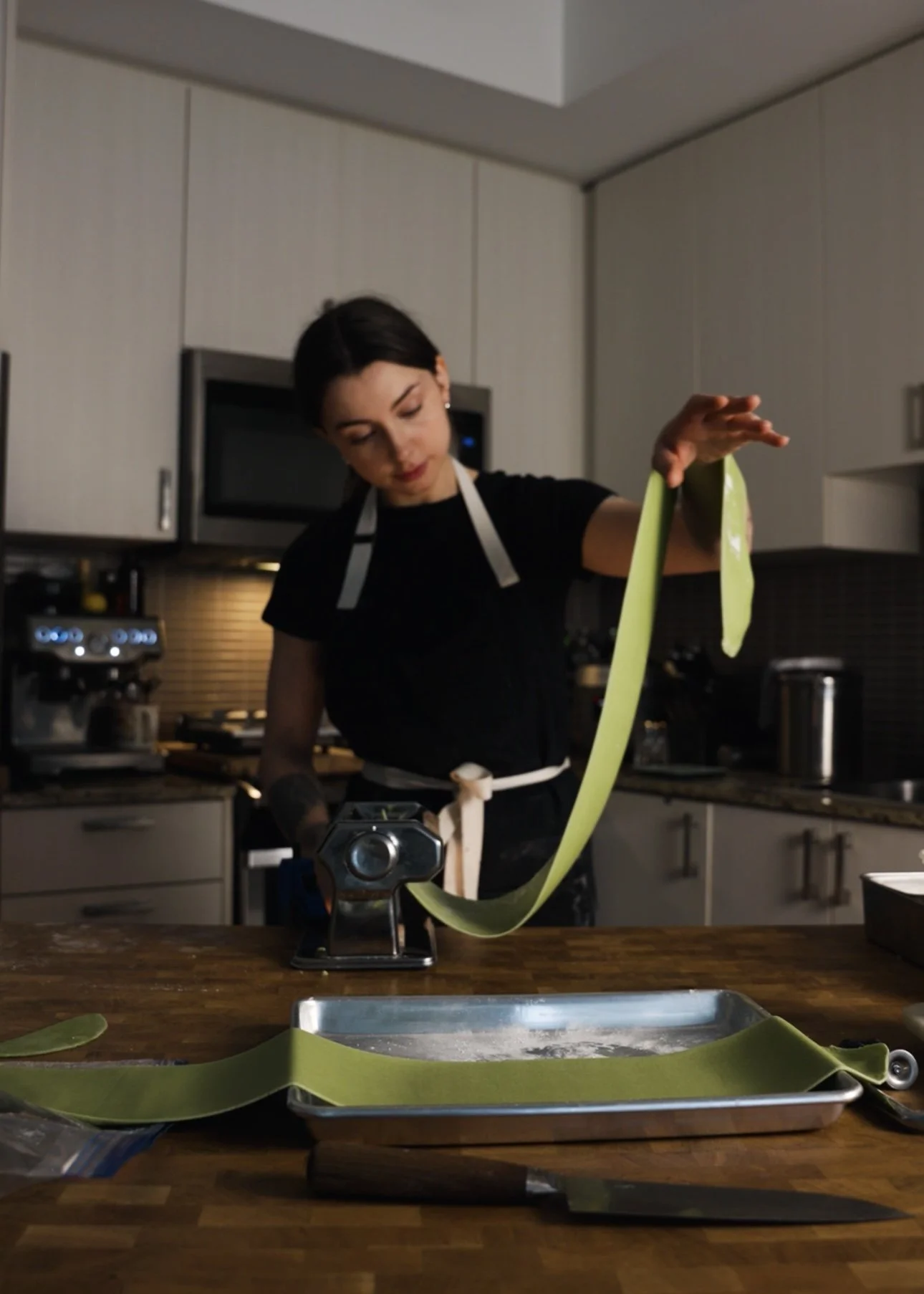
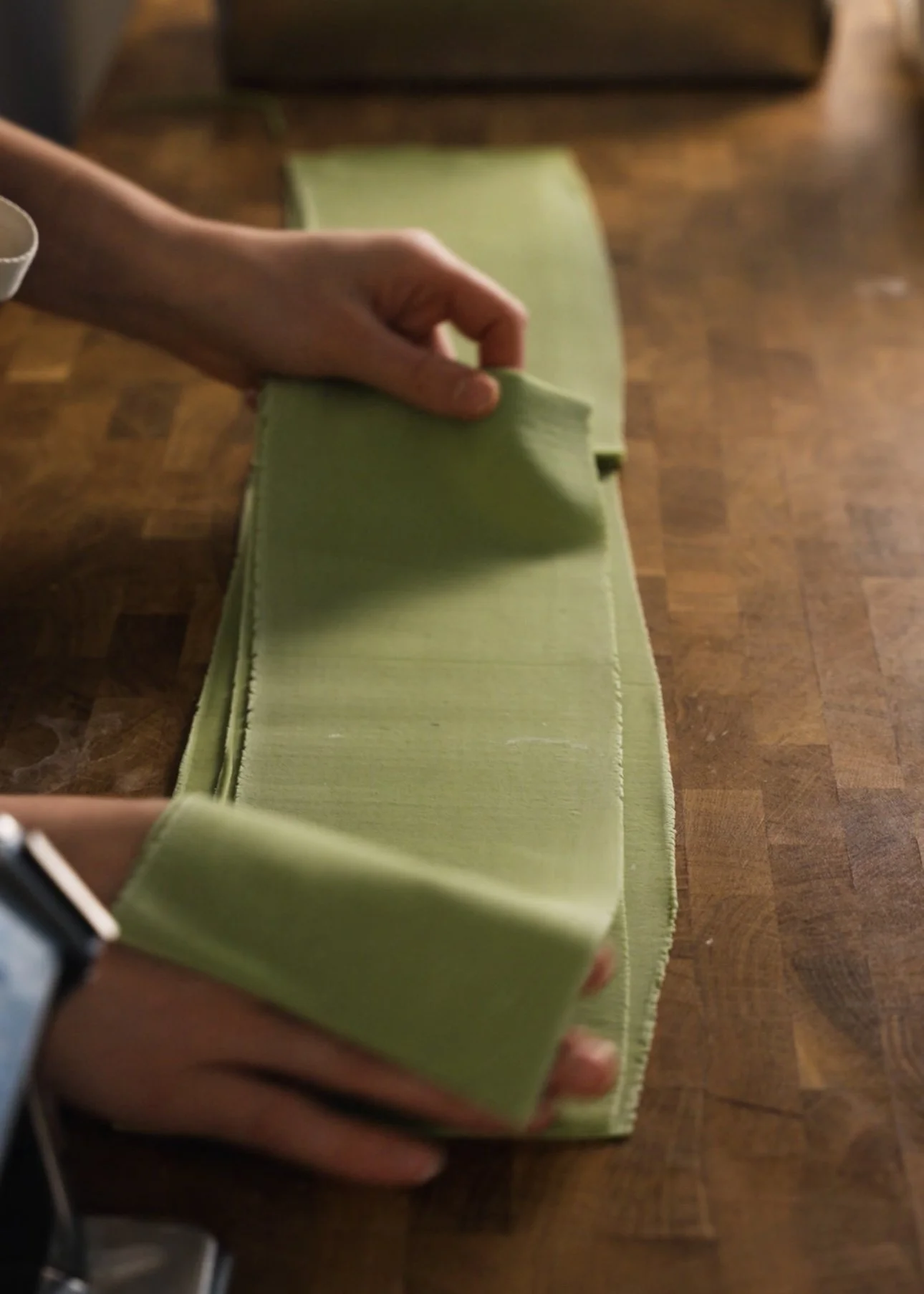
Repeat this fold process a total of two times, for both dough portions.
After the second and final envelope fold, proceed to flatten the dough out to the thinnest setting.
Divide the lengths of dough into shorter strips so it it easier to cut the noodles.
If you don’t have a noodle attachment for your machine, you can hand cut the the noodles with a knife, by creating another envelope type fold, and slice starting at the “open” end of the fold. Cut the noodles to whatever thickness you desire.
If you DO have a noodle attachment on your pasta maker, proceed to pass each strip of dough through your attachment to form your noodles.
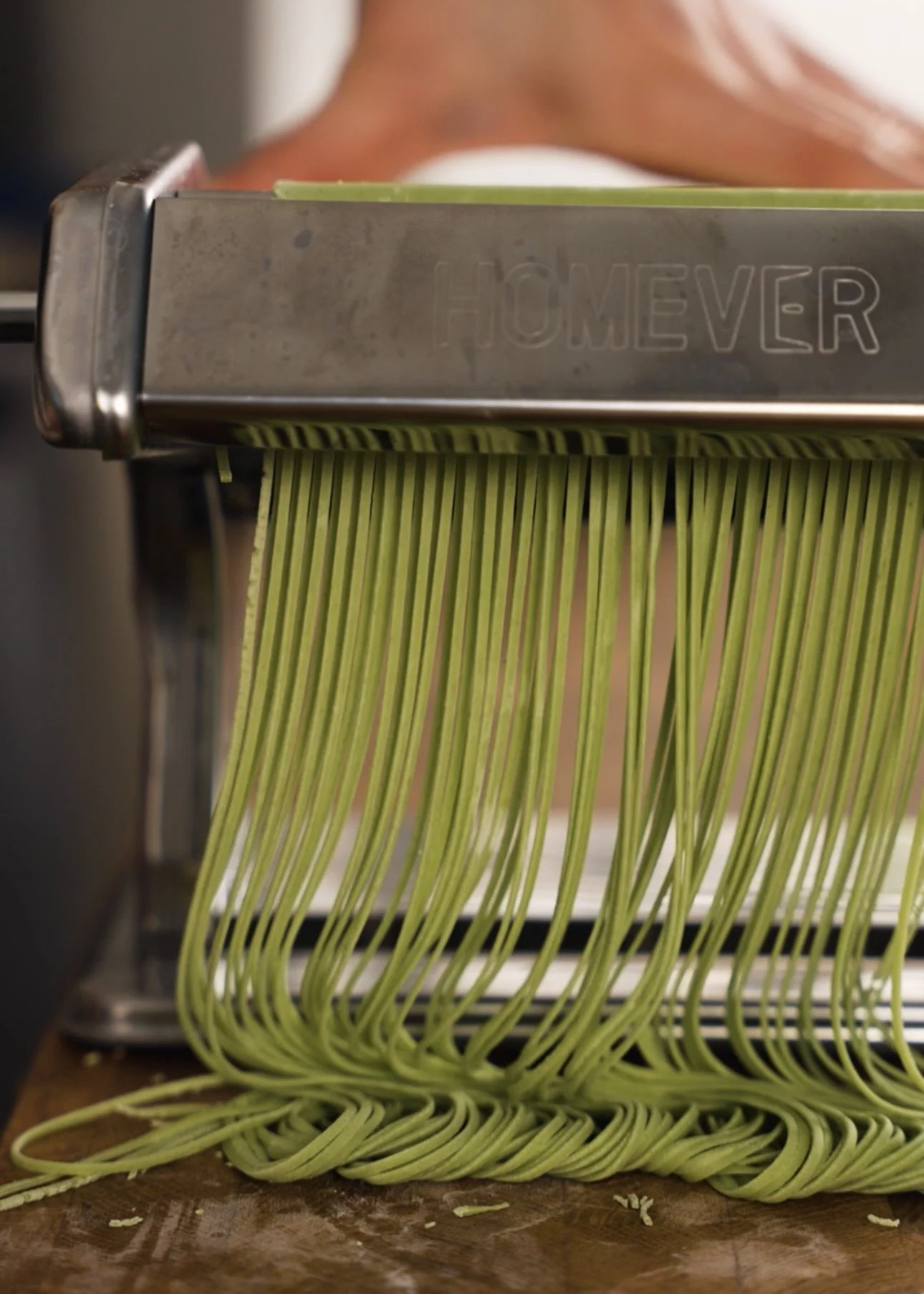
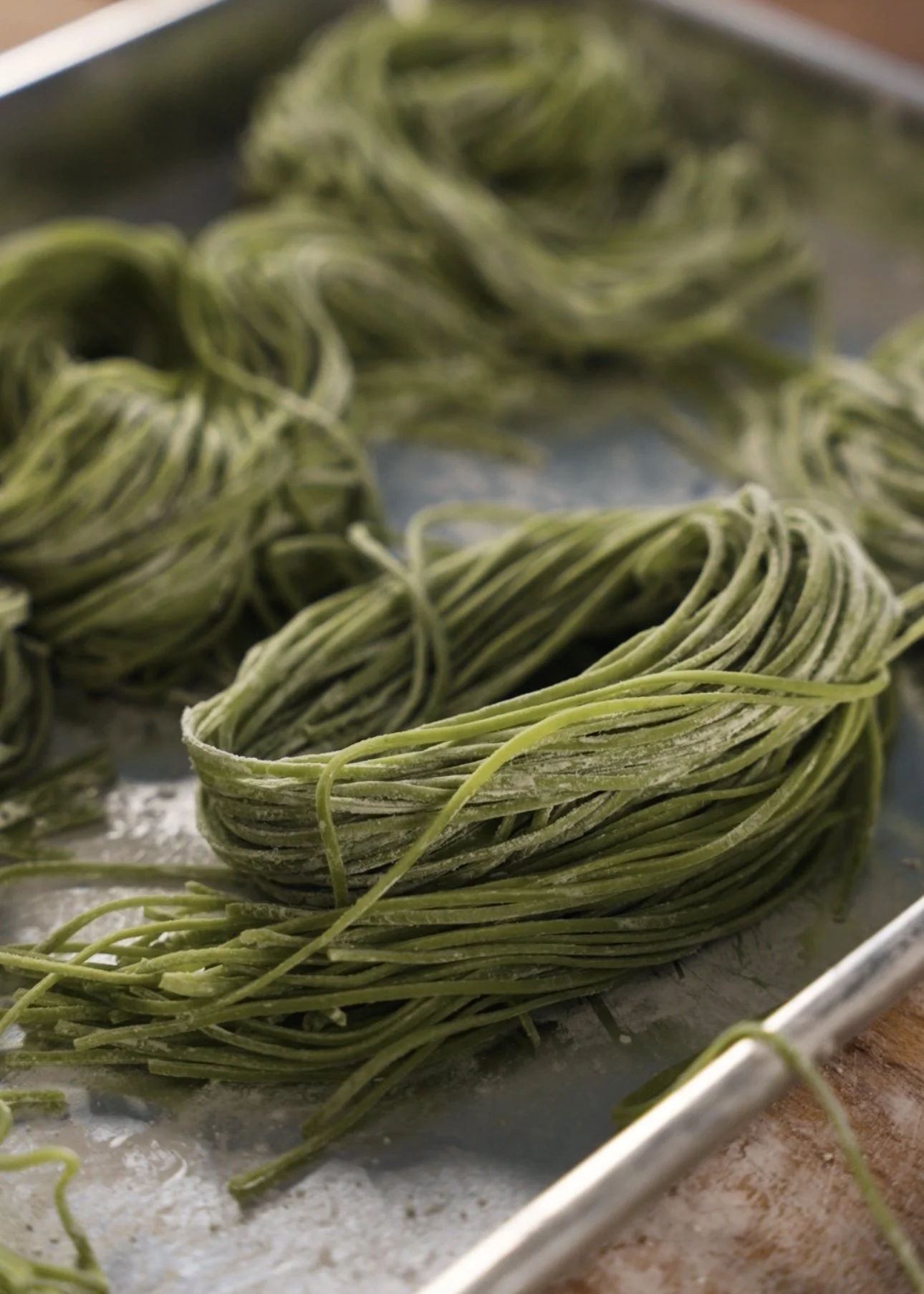
Dust the noodles in corn starch and place on a baking sheet portions (also dusted with corn starch) until needed.
Note: At this stage the noodles can be frozen! I wouldn’t recommend keeping them in the fridge or else they will become too moist and get stuck together! Otherwise, use them right away.
To Cook Noodles and Ongsimi:
Place a pot of water over high heat and bring to a boil.
Add the ongsimi and cook for 5 minutes, or until they start to float. Remove from the water and set aside.
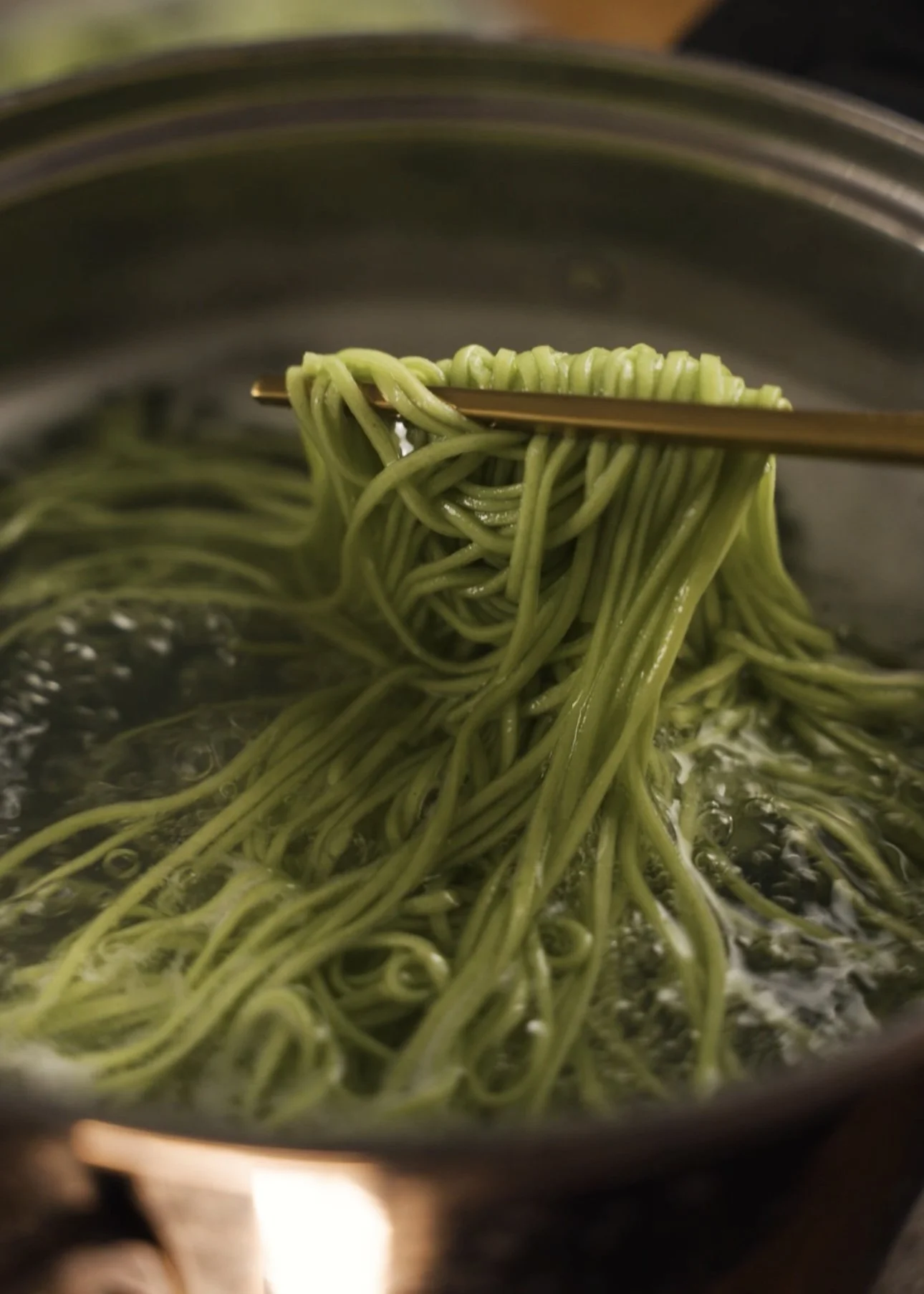
In the same pot (with fresh water also boiling), cook the noodles. Cook one portion at a time, boiling the noodles for only 1 minute (depending on thickness— if they are hand cut, they likely need more time!)
Use chopsticks to fish them out, and place in a sieve. Run the noodles under cold water to stop them from cooking and help them maintain that ideal bouncy texture.
To Serve:
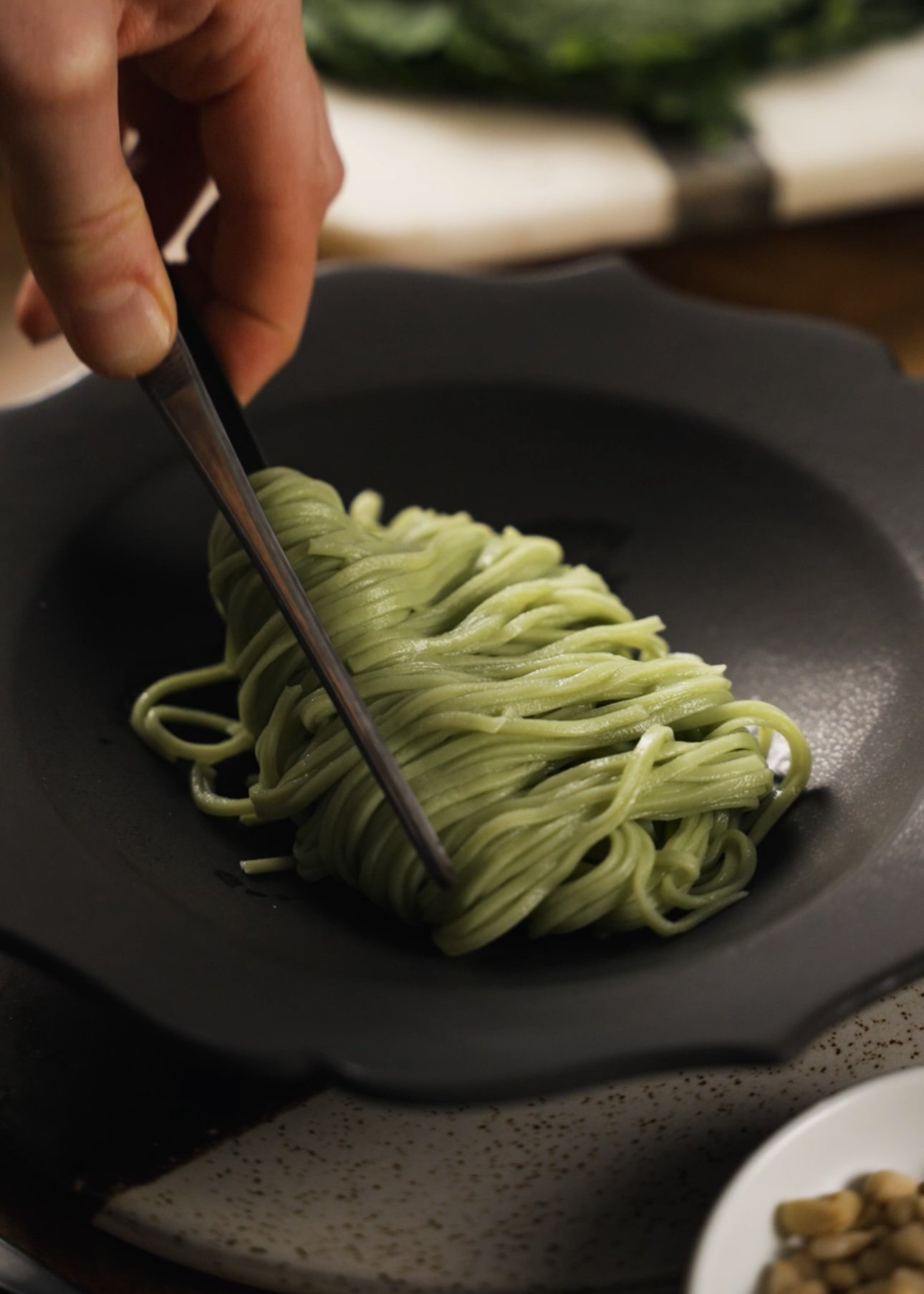
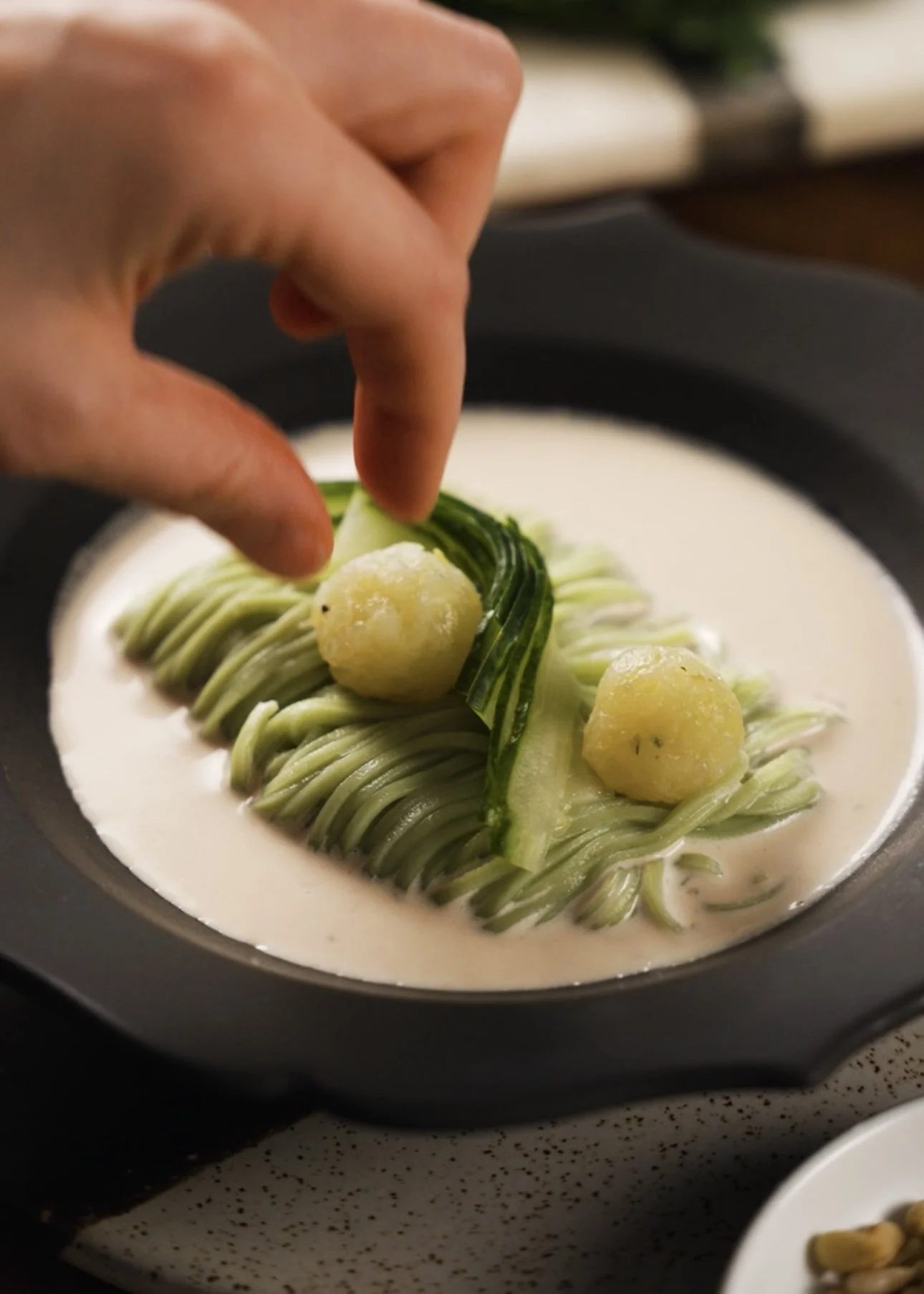
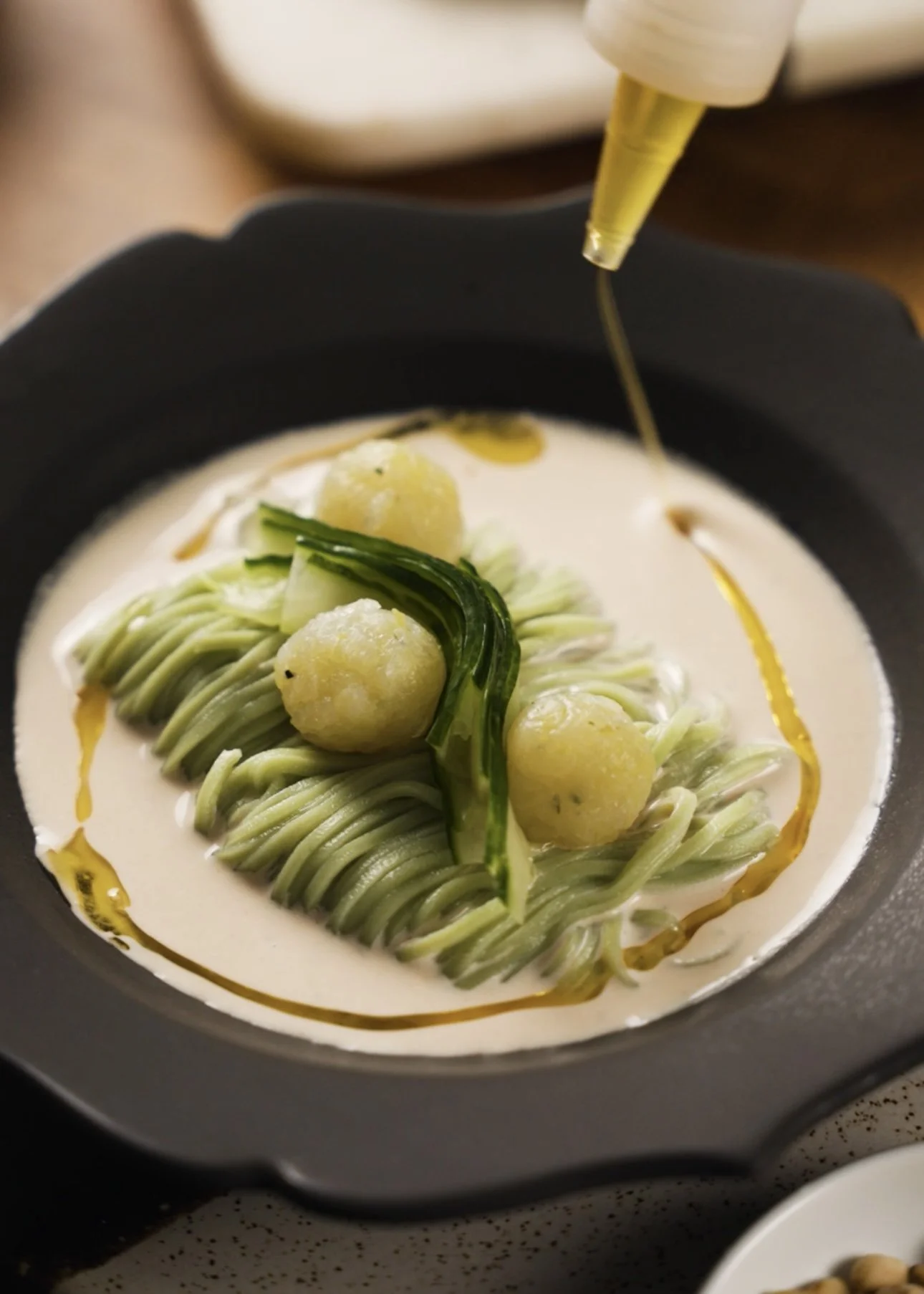
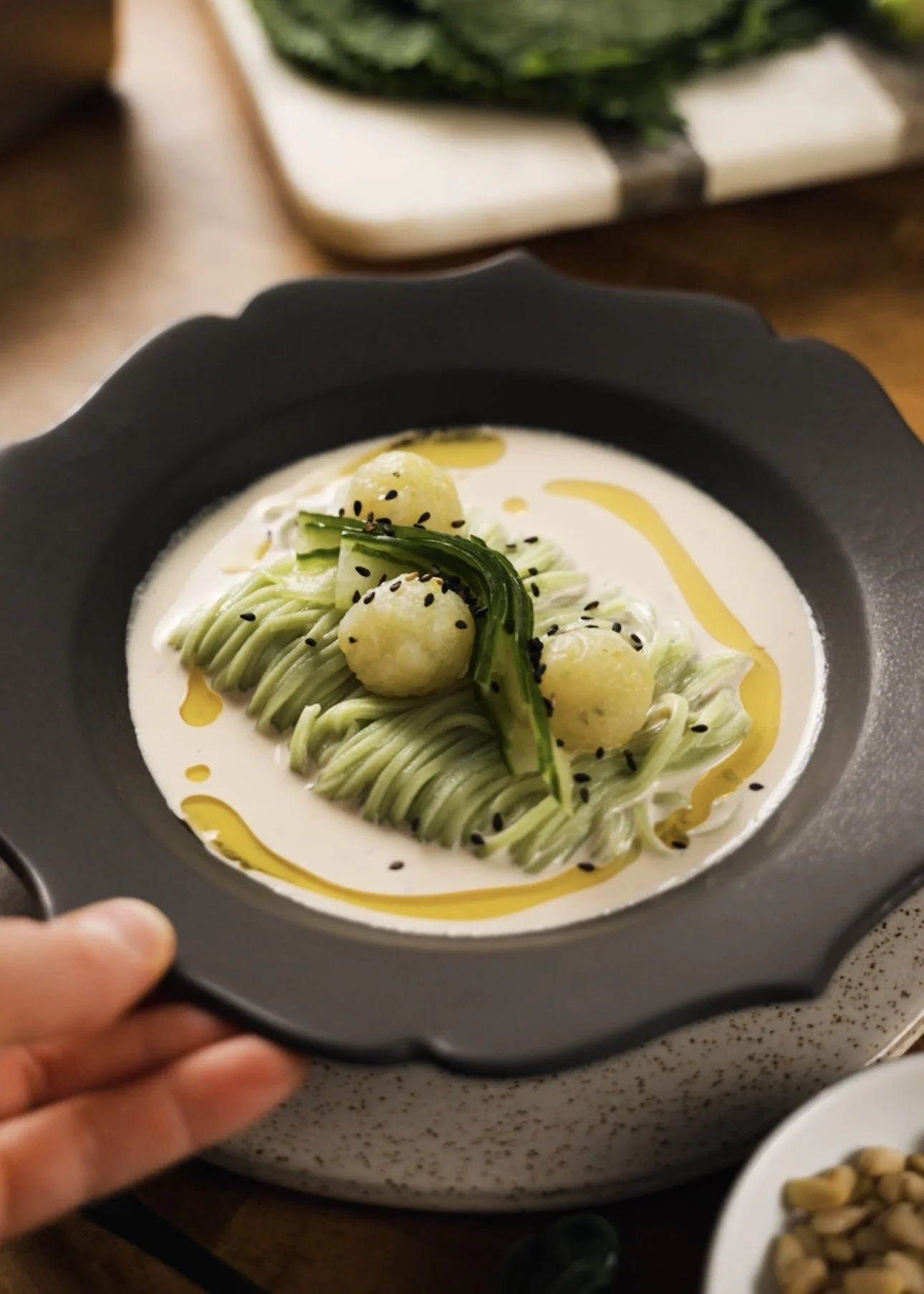
Add one portion of cooked noodles to a bowl
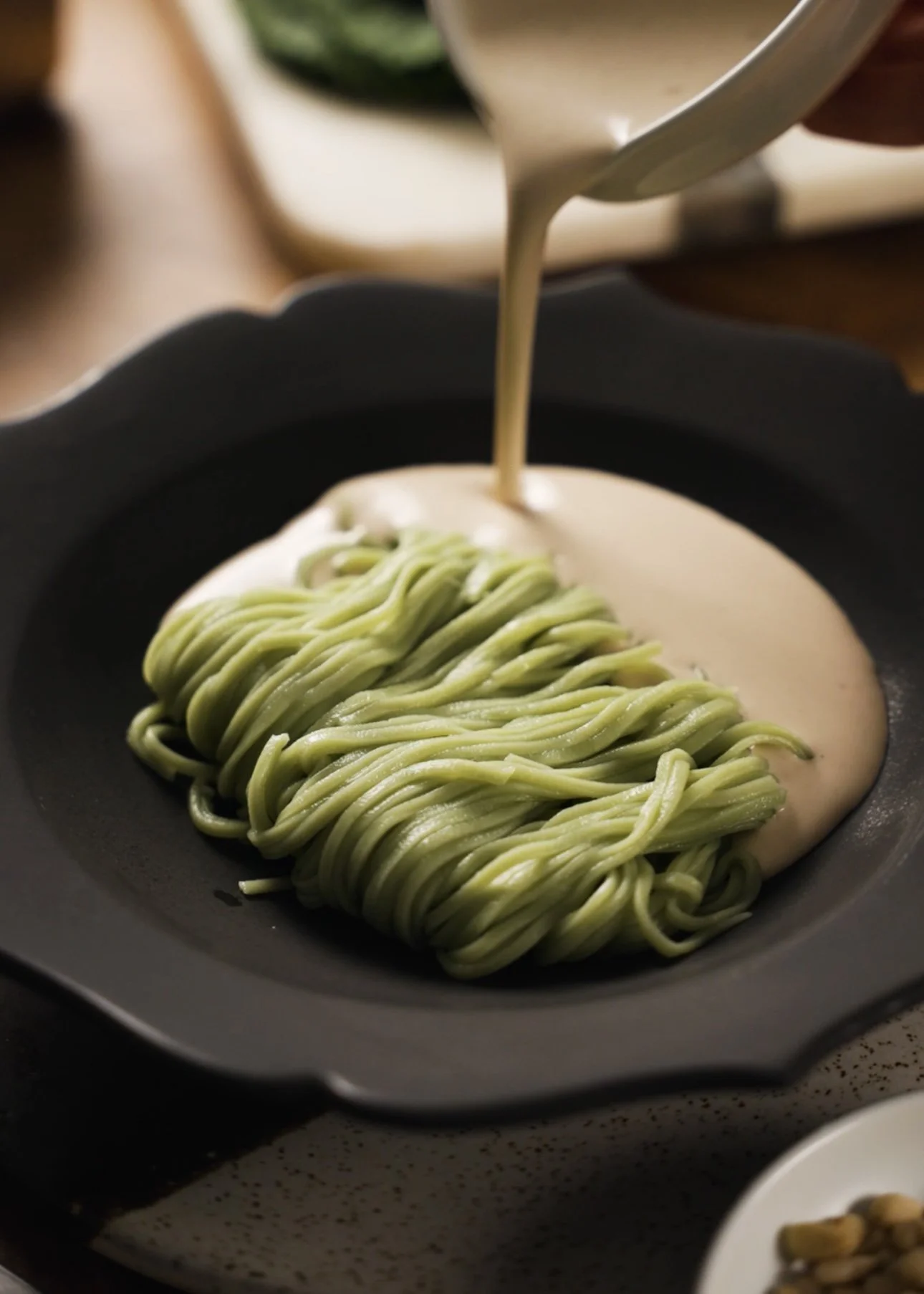
Pour some of your cold pine nut broth on top.
Place 3-4 ongsimi on top.
Optionally: Garnish with thinly sliced cucumber (slightly salted and squeezed), sesame seeds, and a drizzle of perilla oil.
If you have any questions or suggestions feel free to leave me a comment! <3 Enjoy